Shock absorber dyno testing
What a shock dyno and a spring dyno measure, why dyno testing is used in suspension service and development, and what a dyno result does not tell you.
Dyno testing is a measuring tool that helps you understand how suspension works below the surface. At TTM Factory dyno testing is used to assess both shock absorbers and springs. A shock dyno shows how a shock produces damping force at different shaft speeds. A spring dyno measures spring forces and the effect of preload, and lets us compare for example coil and air springs, the effect of oil level and internal changes in the fork.
A dyno does not replace the rider, the feel on the bike or real-world testing, but it gives useful data on how the individual parts of the suspension behave. When the measurements are combined with rider feedback, sag, the balance of the bike and a practical test ride, the suspension can be developed far more systematically.
01 Dyno testing is a measuring tool
TTM Factory has made dyno testing part of its shock absorber service, setup and development work. With a dyno we can measure the forces produced by a shock or a spring under controlled conditions and see how the part reacts at different points of its movement.
A dyno test alone does not tell you how a bike rides. It does not know the riding style, the track surface, traction, braking bumps, roots or how the bike feels when you actually ride it. What the dyno does tell you precisely is what the measured part does at the moment of measurement.
02 What does a shock dyno measure?
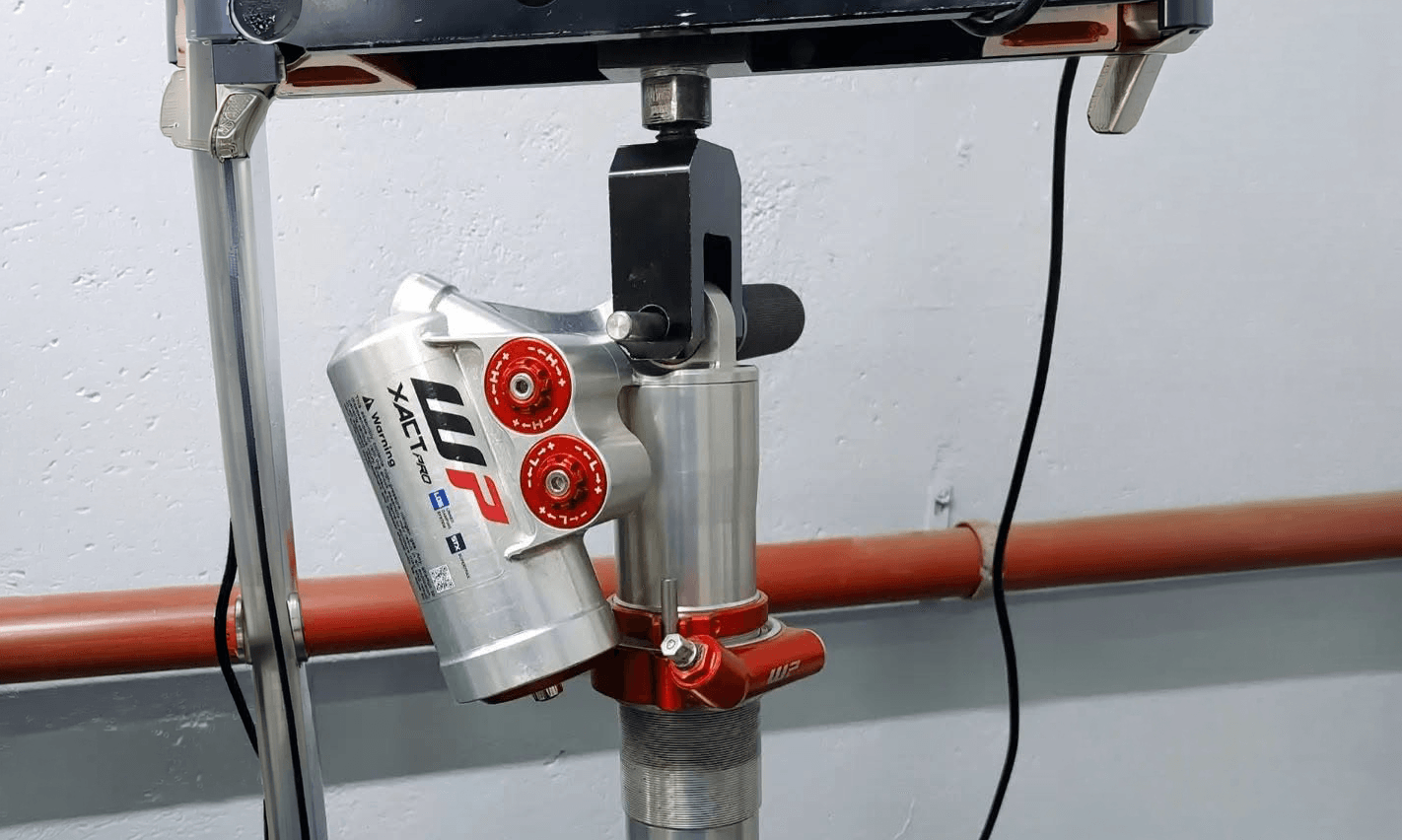
A shock dyno measures the resisting force a shock produces when it is moved in and out in a controlled way. The results show, for example, how the shock behaves in slow chassis movement and in faster hits.
Among other things, the measurement shows how much force the shock produces at different shaft speeds. This helps judge whether the shock is in good condition, whether changes went in the intended direction and whether two shocks differ from each other.
A shock dyno is especially useful when you want to compare a service, a setup or a modification before and after. If the shock gets a revalve, internal changes or a thorough service, the measurement shows which way its behaviour changed.
03 Spring dyno: what does measuring spring force tell you?
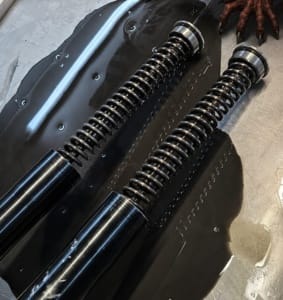
The shock absorber alone does not define how the suspension works. The spring, preload, air spring, oil level, internal spacers and the fork design all affect the attitude of the bike, how it uses its travel and how much support the suspension gives in different situations.
A spring dyno lets us measure and compare spring forces in a controlled way. It shows how much force is needed to move the spring at a given point and how, for example, more preload, a different spring rate, a change in the air chamber or the internal design of the fork affect the whole.
So the suspension is judged on how the spring carries the bike and the rider as well as on damping. Two springs that look the same on paper can behave differently if the preload, the design or the measuring situation differs.
- The force the spring produces can be measured at different points of compression.
- The effect of preload shows up in the measurement.
- Air springs and coil springs can be compared more systematically.
- The effect of oil level and air gap can be assessed, especially on bottoming support in the fork.
- The effects of internal spacers and fork designs can be compared.
- Differences between forks or settings become visible.
04 Why use dyno testing in a service?
During a service, dyno testing helps make sure the shock works logically and consistently. If the shock has a fault, air in the oil, internal wear or a clear deviation in how it works, the dyno can help locate the problem.
- The effect of the service can be verified by measuring.
- Abnormal behaviour is easier to spot.
- The effects of modifications can be compared before and after.
- Similar shocks can be compared with each other.
- Spring forces and the effect of preload can be looked at separately.
- Testing brings repeatability to development work.
This is especially useful when the goal is not just to “put the shock back together” but to understand how it works and how it can be developed for the rider.
If you are not sure whether your bike needs a basic service or a closer look, see our suspension service and the service form. The form gives us a better picture of the bike, the rider and the problem you want to solve.
A dyno does not replace a test ride
A shock or a spring can look good on the dyno, but whether it works is always decided on the bike. Rider feedback, the geometry of the bike, spring rate, sag, balance and riding conditions all affect how the whole package feels.
05 How does a dyno help development work?
In development the biggest benefit of a dyno is comparability. When a change is made to a shock or a spring, we can measure which way it moved the package. This cuts down guesswork and helps build more consistent suspension.
Without measurement, a lot rests on feel alone. Feel still matters, but the dyno puts data next to it. When the feel on the bike and the measurement support each other, better decisions can be made.
Damping comparison
The effect of a service, a revalve or a modification shows in the damping curves.
Spring force measurement
The effects of the spring, preload, air spring and bottoming support in the fork can be compared.
Developing the whole package
When damping data, spring forces and rider feedback are combined, the suspension can be developed with less guesswork.
06 What does a dyno result not tell you?
A dyno result alone does not tell you whether the bike is perfect to ride. It does not see the riding position, throttle use, braking, tyre grip or how the bike behaves as a whole.
The perfect setup is often personal. The same setting can suit one rider perfectly and feel too soft, too harsh, too slow or unsettled to another. So a dyno result is one part of the picture.
In motocross and enduro especially, the package is also affected by sag, front and rear ride height, tyres, mousse or inner tube, the riding surface and how the rider loads the bike. Measurement data must always be read together with practical experience.
07 When is dyno testing especially useful?
Dyno testing is especially useful when you want to verify how a shock works, compare changes or develop the suspension with a clear goal.
- When a shock gets a thorough service.
- When a shock is modified or revalved.
- When you want to measure spring forces or compare springs.
- When you want to understand the effect of preload, an air spring or oil level better.
- When the bike does not behave the way the rider expects.
- When you want to compare two settings.
- When you are looking for a fault, inconsistency or unexplained behaviour.
- When racing calls for repeatable, controlled development.
If the bike feels too soft, too harsh, bottoms easily, does not use its travel sensibly or feels unbalanced, dyno testing can help find out whether the problem is the damping, the springs or the overall setup.
08 Dyno testing to support real riding
Suspension development still needs practical testing. Riding shows how the bike works in the real world. The dyno shows what actually changed in the shock or the spring.
When every change can be tied to both a measurement and rider feedback, the next adjustment starts from what you know, and development moves faster.
Service or modification
Dyno measurement
Test ride
Feedback and further development
09 How does dyno testing relate to sag and balance?
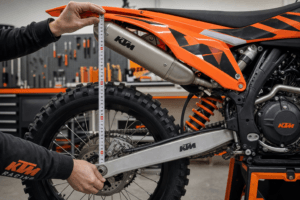
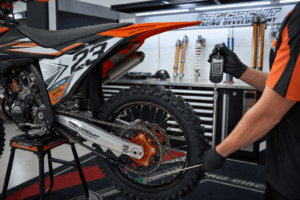
Sag and the balance of the bike are still the foundation of suspension. If the springs are wrong, the sag is off or the front and rear are out of balance, changing the damping alone may not solve the problem.
Dyno testing helps you understand the individual parts, but the bike as a whole still has to be set up for the rider. Dyno data should be combined with setting the sag, choosing the springs and practical riding feedback.
To understand the effect of sag in more detail, read our guide to setting sag. If you are looking for an adjustment direction based on a symptom, see the suspension setup chart.
10 Summary
Dyno testing is an important tool for TTM Factory in shock absorber service, troubleshooting and development. A shock dyno shows how a shock produces damping force. A spring dyno helps you understand spring forces, preload and how the spring supports the bike at different points of its travel.
A dyno does not replace the feel on the bike, but it makes the behaviour of the suspension visible and easier to compare. When measurement data is combined with practical experience, rider feedback and proper service work, the result is suspension the rider can trust more.
Want to develop your suspension with data?
TTM Factory services, sets up and tests the suspension of motocross, enduro and off-road bikes. Dyno testing helps make sure the service, setup and modifications take the suspension in the right direction.