Motocross suspension setup chart and troubleshooting
Motocross suspension setup chart: fork and rear shock symptoms, likely causes and which clicker to turn. Plus bike balance, spring rate, track conditions and faults.
A motocross suspension setup chart lets you start from the symptom. If the fork dives, the rear kicks, the bike pushes in corners or the chassis feels nervous, the cause can be the sag, the spring rate, the balance of the bike, rebound, compression, oil level or a mechanical fault.
Related guides
01 Before you start adjusting
Suspension setup is not about turning a random clicker. Good setup starts with the basics in order. If the sag is off, the spring rate is wrong or the fork binds because of axle alignment, it is easy to use the clickers to fix the wrong thing.
Always start by writing down your current settings. Count the clickers gently all the way in and return to the original setting. Then make only one change at a time and test the same section of track again.
One change at a time
If you change the sag, fork height, compression and rebound at the same time, you no longer know what did what. Make a small change, test it, write it down and only then move on.
02 Fork symptoms and what to adjust
Fork problems often show under braking, on corner entry, over sharp bumps, on landings and in ruts. The fork can feel too soft when the real cause is the rebound packing down. It can also feel harsh when the problem comes from the rear sitting low and the balance of the bike.
| Symptom | Where? | Likely direction | Check first | Change to try |
|---|---|---|---|---|
| The fork dives too much | Braking, corner entry | Too little front support, or the fork rides too deep in its travel | Fork springs, fork compression, bike balance | Fork compression 2–3 clicks in |
| The fork goes down and stays low | Long braking bumps | Rebound too slow, the fork packs down | Fork rebound | Rebound 2 clicks out |
| The fork bounces back at your hands | Braking, landing | Rebound too fast | Fork rebound | Rebound 2 clicks in |
| The fork is harsh on the hands | Braking bumps, sharp bumps | Too much initial or mid-stroke compression, or the fork rides too high in its travel | Compression setting, oil level | Compression 2–3 clicks out |
| The fork is harsh on small bumps | Small sharp chatter | Too much low or mid speed support, or too stiff in the initial stroke | Fork compression | Compression out |
| The fork is fine on small bumps but bottoms on big hits | Jumps, big landings | Too little end-of-stroke progression | Fork oil level / air gap | Raise the oil level 5–10 mm at a time |
| The front does not hold in corners | Corner entry / mid-corner | Too little weight on the front, or the initial stroke of the fork is too stiff | Rear sag, fork height in the clamps | Raise the fork tubes 2–3 mm or open the compression |
| The bike pushes in corners | Mid-corner | Rear too low or front too high | Rider sag, fork tubes | Less rear sag or fork tubes up |
| The bike turns too quickly | Corner entry, ruts | Rear too high or front too low | Sag and fork tubes | More rear sag or lower the fork tubes |
| The front feels loose after a bump | Sharp hit, rebound stroke | Rebound too fast | Fork rebound | Rebound in |
03 Rear symptoms and what to adjust
Rear problems often show in acceleration bumps, on landings, on jump faces, in braking bumps and as a lack of traction. Rear shock settings are strongly affected by rider sag, static sag, spring rate, the condition of the linkage and rebound speed.
| Symptom | Where? | Likely direction | Check first | Change to try |
|---|---|---|---|---|
| The rear kicks up | Braking bumps, landing | Rebound too fast or high speed compression too stiff | Rear rebound, HSC | Rebound 2 clicks in |
| The rear kicks sideways | Acceleration or braking bumps | Rebound too fast, rear too high, or the tyre loses contact | Rebound, sag | Rebound in or a little more sag |
| The rear stays down | Long section of bumps | Rebound too slow, the shock packs down | Rear rebound | Rebound 2 clicks out |
| The rear squats too much on the throttle | Corner exit | Too little low speed compression or too much sag | Rider sag, LSC | LSC 2–3 clicks in |
| The rear sits too low | Whole track | Too much rider sag or the rear spring is too soft | Static sag + rider sag | More preload or a stiffer spring |
| The rear feels high and nervous | Whole track | Too little sag or the rear spring is too stiff | Sag | More sag or a softer spring |
| The rear cannot find traction | Slippery acceleration | Too much compression or rebound too fast | LSC, rebound | Compression out or rebound in |
| The rear bottoms out | Landings, big hits | Too little compression, too much sag or the spring is too soft | Sag, HSC/LSC | HSC/LSC in, check the spring |
| The rear kicks on the jump face | Jump take-off | Rebound too fast or HSC too stiff | Rebound, HSC | Rebound in first, HSC out if needed |
| The rear squats and the bike will not turn | Corner entry / mid-corner | Too much rear sag or a soft spring | Sag | Less sag or a stiffer spring |
04 Balance of the whole bike
Not every problem belongs to the fork or the rear alone. Often the question is what attitude the whole bike runs at. If the rear is too low, the front easily feels high and the bike will not turn. If the rear is too high, the bike can get nervous and the front too aggressive.
| Symptom | Likely cause | Check first | Change to try |
|---|---|---|---|
| The bike will not turn | Rear low / front high | Rider sag, fork height in the clamps | Less sag or fork tubes up |
| The bike is too nervous | Rear high / front low | Sag, fork tubes | More sag or fork tubes down |
| Front grip disappears on corner exit | The rear squats and the front gets light | Rear shock LSC, rear spring | More rear support |
| The bike changes direction in bumps | The front and rear do not recover at the same rhythm | Rebound at both ends | Adjust the end that feels like it leaves the ground |
| The bike feels big and lazy | Too much sag or too relaxed geometry | Sag, fork tubes | Less sag / fork tubes up |
05 Reading spring rate and sag
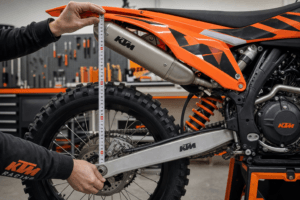
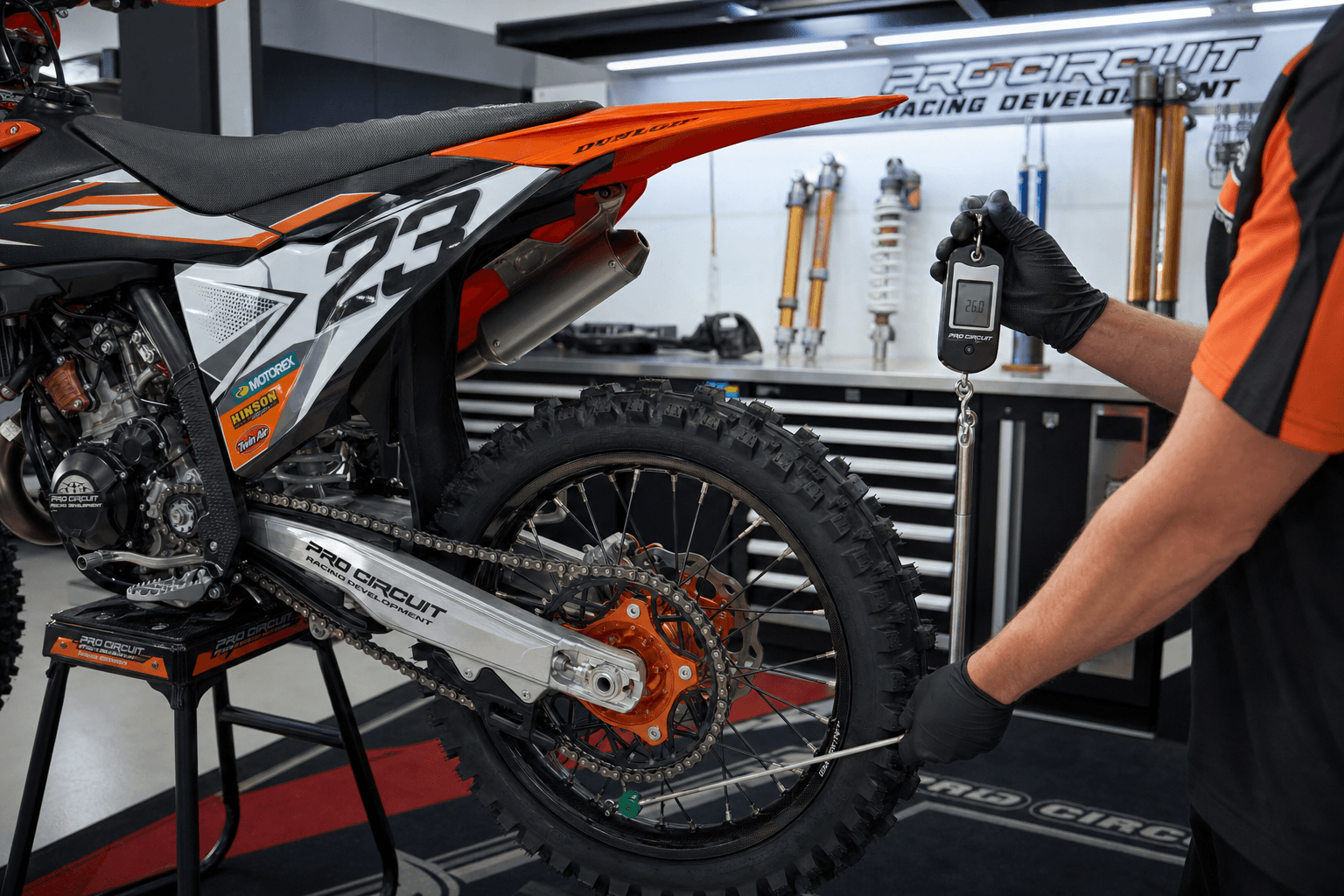
Rider sag tells you whether the bike sits at the right height with the rider on board. Static sag tells you a lot about whether the spring rate is right. If you can get rider sag right but static sag is clearly off, preload alone will not necessarily solve the problem.
| Measurement / symptom | What it means | Fix |
|---|---|---|
| Rider sag right, static sag too small | Rear spring too soft, too much preload was needed | Stiffer rear spring |
| Rider sag right, static sag too big | Rear spring too stiff, too little preload | Softer rear spring |
| Clickers at the end of their range and still bad | The clicker range is not enough | An internal change, no longer an external adjustment |
06 Typical settings by track
The same setting does not work the same way on every track. A hard, slippery track often needs more compliance and grip. A soft track with deep ruts needs more support. Big jumps need support at the end of the stroke.
| Track / conditions | General need | Typical direction |
|---|---|---|
| Hard and slippery track | More grip and comfort | Compression a little out, calm rebound, balance possibly more to the front |
| Soft track / deep ruts | More support | Compression a little in, balance more to the front |
| Lots of braking bumps | Front and rear need to recover properly | Rebound must not be too slow |
| Big jumps | More end-of-stroke support | Fork oil level / compression, rear shock HSC |
| Fast sandy whoops | Calmness and recovery | Rebound fast enough, no packing down |
| Wet track | Grip matters more than bottoming resistance | Softer compression, calm rebound |
Faults you should not fix with settings alone
If the bike behaves illogically, the adjusters make no difference, or the same setting feels different every ride, the problem may be mechanical. Then turning the clickers is not the answer.
07 When could it be a fault?
| Symptom | Possible fault | How it shows |
|---|---|---|
| The clickers make no difference | A blocked passage, a wrongly assembled needle or a faulty clicker | Changes cannot be felt on the track |
| The fork feels sticky | The fork is twisted, the axle was tightened in the wrong order or the clamps are off | The fork does not return freely when pushed |
| The rear creaks or moves in steps | Dry or worn linkage or swingarm bearings | The rear does not move smoothly |
| The rear shock heats up and fades quickly | Air in the oil, wrong gas pressure or an internal leak | Works at first, gets worse during the ride |
| The shock bottoms strangely even with stiff settings | Piston band, seal, bottoming bumper or an internal leak | The damping does not carry the load |
| The rear shock leaks | Worn shaft, seal failure, pressure problem | Oil on the shaft or the body |
| The adjustment range runs out | Spring or valving wrong for the use | The clickers are at the end of their range |
08 A practical order of work
When the bike feels bad, do not start by guessing. Go through things in order. That keeps the settings logical and makes it more likely you find the right direction.
Check the condition of the suspension and the linkage
Measure rider sag and static sag
Judge the spring rate and the balance of the bike
Make one clicker change at a time
09 When do you need a service or an internal change?
Not everything can be solved with external adjusters. If the clickers are at the end of their range, the bike only works on one type of track, or the symptom does not change logically with the adjustment, the internal behaviour of the shock may not match what the rider needs.
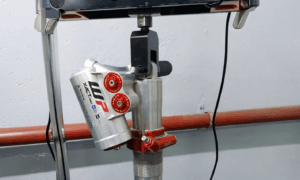
Then you often need a service, a check of the spring rate or an internal change, meaning a look at the valving. Dyno testing can show which way the damping changes before and after a service or a modification.
10 Frequently asked questions
Where should I start with motocross suspension setup?
Start by checking the condition of the suspension, the linkage and the bearings, and measure rider sag and static sag. Only then make clicker adjustments.
What should I do if the fork dives too much?
First check the sag, the front support and the balance of the bike. Then try closing the fork compression in small steps, for example 2–3 clicks at a time.
Why does the rear kick over bumps?
A kicking rear can come from rebound that is too fast, high speed compression that is too stiff, wrong sag or a mechanical fault in the linkage or the shock.
When are clicker adjustments no longer enough?
If the adjusters are at the end of their range, the bike does not react to changes or the symptom does not change logically, the problem can be the spring rate, a service need or the internal valving of the shock.
Cannot get the bike working with adjustments?
If the suspension does not react to adjustments logically, or the bike still feels unsettled, the problem may be a service, the spring rate or the internal valving. TTM Factory helps with suspension service, setup and modifications.